
Metals in the Cloud: Copper Series I The New Copper Rush and the Future of Mining in the Digital Age
- Mweemba Ntembe
- Oct 26, 2025
- 4 min read

Updated: Nov 4, 2025
The twenty-first century is redefining the foundation of progress. From artificial intelligence to renewable energy, from data centers to electric vehicles, the global economy is being rebuilt on two essential pillars: metals and the cloud. These two worlds, once distinct, are now converging into a single ecosystem that determines who powers the future.

The New Industrial Backbone
Every industrial revolution has revolved around a defining resource. Coal fuelled the age of steam. Oil shaped the century of combustion. Copper is now the conductor of the digital age.
It carries the world’s electricity, links the circuitry of our devices, and enables the renewable transition on which our future depends. Every electric car, wind turbine, solar array, and high-performance data center relies on it. The more connected our world becomes, the more copper we need.
The International Energy Agency estimates that clean-energy technologies will require more than double today’s annual copper output by 2035. The International Copper Association warns of a potential six million tonne shortfall by the same year. Supply has struggled to keep pace with accelerating demand, and new mines take over a decade to come online. The result is a modern resource race where governments and corporations compete to secure the most strategic metal of the century.
From Ore to Algorithm
Mining has long been perceived as a traditional industry defined by machinery and manual labor. That perception is fading. A digital transformation is reshaping how minerals are discovered, extracted, processed, and traded.
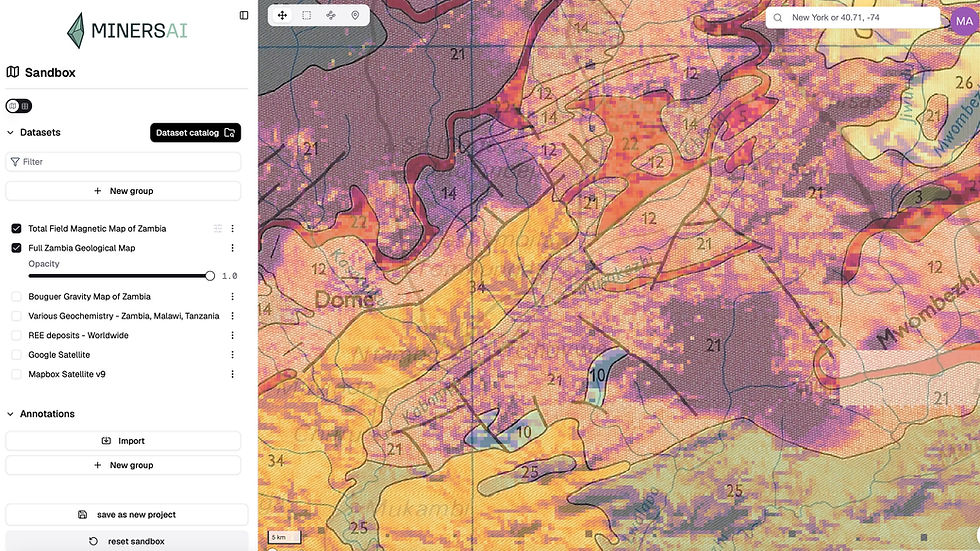
Artificial intelligence is now being used to locate mineral deposits with remarkable precision. Machine learning models forecast ore grades and predict equipment failures before they occur. Drones survey terrain in real time while cloud-based analytics platforms consolidate geological and operational data into a single source of truth.
This fusion of data and extraction has created what some call the “smart mine.” Predictive analytics can determine not only how much copper lies beneath the ground but when and how it should be mined to maximise efficiency and reduce environmental impact.
Companies in the energy and resources sector have built advanced data ecosystems, integrating legacy systems with modern cloud infrastructure. The aim is to create intelligent decision engines that connect physical and digital operations, transforming raw data into actionable insight at every level of a mining enterprise.
Africa’s Strategic Opportunity
Africa sits at the heart of this new resource revolution. The continent holds almost 30 percent of the world’s mineral reserves, according to the United Nations Conference on Trade and Development. Yet historically, most African economies have focused on raw-material exports, capturing little of the value created further along the global supply chain.
That reality is beginning to change. Zambia, the world’s eighth-largest copper producer, is positioning itself as a critical link in a new global framework sometimes described as the Zambia-United States Copper Corridor. The concept connects Africa’s mineral wealth with American processing capacity and digital innovation, creating an end-to-end ecosystem that is as much about data as it is about metal.
For Zambia, this is a once-in-a-generation opportunity. By embedding technology into extraction, logistics, and trade, the country can move from being a raw exporter to a value creator. It can attract global investment, foster digital jobs, and strengthen its position as a supplier of responsibly sourced copper to power the world’s clean energy transition.
The Convergence Economy and the future of mining in the digital age
The fusion of metals and the cloud represents more than a technological trend. It is an economic realignment. Nations that master both the physical and digital dimensions of production will shape the trajectory of global growth.
Metals form the tangible infrastructure of progress, the circuits, cables, and conduits that make energy and communication possible. The cloud forms the intelligence layer, the algorithms, automation, and predictive systems that make that infrastructure efficient and sustainable. Together they create a continuum of value that underpins every modern industry, from manufacturing and mobility to finance and artificial intelligence itself.
In this new economy, data is the new ore. It must be mined, refined, and distributed just as carefully as copper or cobalt. The winners will be those who understand that the physical and digital worlds are not separate domains but parts of one integrated system of production and innovation.
A Call to Rethink Value
The story of copper is no longer confined to geology or metallurgy. It now intersects with climate strategy, data science, and global cooperation. For African economies, it is a chance to redefine their role in the global value chain. For investors, it signals that the next frontier lies at the intersection of technology and resources. For forward-thinking businesses, it is a reminder that the future will not be built by choosing between the physical or the digital, but by mastering both.
The age of Metals in the Cloud has begun, and it will determine not only how we power our devices but how we power our economies, our societies, our shared future and and the future of mining in the digital Age.
About Bbabsal Mines
Bbabsal Mines Ltd is building a sustainable future for African mining through data-driven exploration, responsible copper extraction, and international trade. With operations spanning Zambia and the United States, Bbabsal is creating a transparent and technology-enabled supply chain that connects Africa’s mineral wealth to global industries powering the clean energy transition.
🌐 Website: www.bbabsalmines.com📩 Contact: Adrian Sakala | adrian@bbabsalmines.com


Comments